
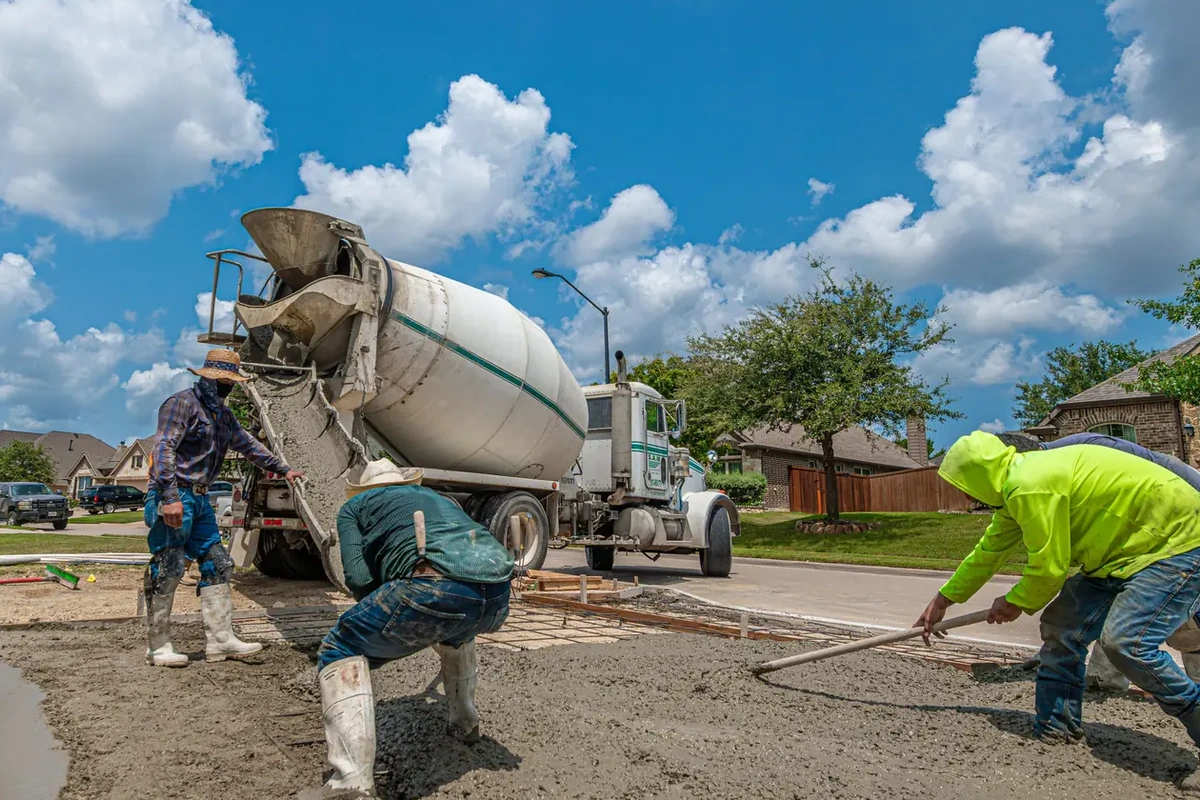
The best replacement project learns from why the old driveway failed.
Old concrete tells a story. Crack patterns can point to movement, unsupported sections, tree roots, drainage, overloaded areas, or joints that did not control cracking as intended. Once the slab is removed, the base and subgrade are visible. That is the right time to correct weak areas, rethink drainage, change width, or upgrade the layout before placing new concrete.
Driveway Replacement project types
Full driveway replacement
Remove the existing driveway from street connection to garage or parking area and rebuild the complete surface.
Sectional replacement
Replace the failed portion when the remaining concrete is stable and a clean joint location is available.
Widening during replacement
Use the project to add parking width, side access, or a better turning area while rebuilding the old slab.
Driveway approach and transition work
Coordinate the garage threshold, sidewalk crossing, curb or street approach, and any right-of-way approval that applies.
What can change the concrete estimate?
Concrete pricing is easier to compare when the scope is written down. These are the details that can change material, labor, equipment, and schedule:
- Existing slab thickness and reinforcement
- Saw cutting and demolition access
- Haul-off and disposal volume
- Condition of subgrade after removal
- New width, parking layout, and turning needs
- Drainage correction and finished elevations
- New slab thickness and reinforcement
- Joint layout and finish
- Street approach or right-of-way permitting if applicable
Looking for a concrete contractor near you in Victoria?
If you searched for a driveway replacement near me, a concrete company near me, concrete services near me, or concrete work near me, the useful next step is the same: match the contractor to the actual project. Share the property location, photos, approximate dimensions, access, what is there now, and how you plan to use the finished concrete. That gives the estimate conversation a real starting point instead of a generic square-foot guess.
Before you approve a bid
Ask what is included for demolition, base preparation, thickness, reinforcement, forms, drainage, joints, finish, cleanup, permits or inspections that apply, and how hidden conditions are handled. A lower total can be more expensive later when major pieces of the scope were never included.
Victoria, Texas conditions worth planning around
The USDA describes the Victoria soil series as very deep, clayey, and very slowly permeable. That does not mean every property has Victoria-series soil, but it does reinforce why grade, drainage, base preparation, and site-specific conditions deserve attention. The National Weather Service maintains climate normals and records for Victoria, and summer heat can also affect placement, finishing, and curing decisions.
For driveway work, current City guidance is more specific than many contractor sites make it sound: the City says work within private property lines can generally be repaired, installed, or extended without a driveway permit, while work in the City right-of-way or street approach requires approval and permitting.
Victoria driveway permitting: City of Victoria FAQ. Victoria-series soil characteristics: USDA NRCS Official Soil Series Description. Victoria climate records and normals: National Weather Service Corpus Christi.
Driveway Replacement FAQ
Repair makes sense when damage is limited and the slab is stable. Replacement becomes more attractive when there is widespread movement, multiple failed sections, bad drainage, or repeated repairs.
Often, yes, subject to property layout, drainage, setbacks, utilities, and any City requirements at the street. Widening should be planned before demolition so grading and forms match the new layout.
All concrete has the potential to crack. Good support, proper curing, appropriate thickness, reinforcement where designed, and control joints help manage cracking, but no honest contractor can promise concrete will never crack.
Victoria says work inside the property lines generally does not need a driveway permit, but work in the City right-of-way or street approach does require approval and permitting.
Schedule depends on demolition, access, size, base correction, weather, concrete availability, finish, and curing. The work may be placed quickly, but the concrete still needs curing time before vehicle use.